
Employee Context
employee records · agreements & documents · contracted capacity · employment history · team · role




Employee time tracking for professional services
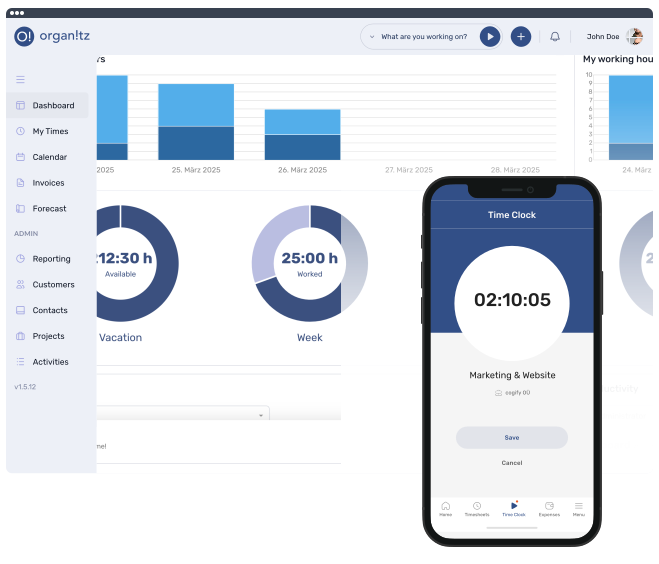
organitz connects employee information, contracted capacity, individual schedules, calendars, leave, and working-time rules with the time people actually record.
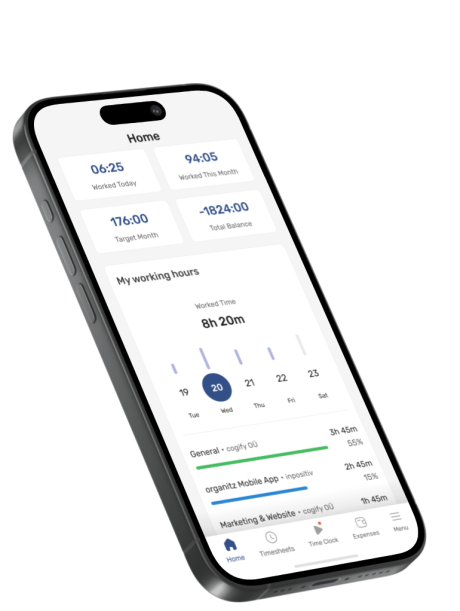
Employees and managers can see how much time was expected, what was actually worked, and how time and leave balances develop.
Web & Mobile · Flexible workforce structures · Swiss data hosting
employee records · agreements & documents · contracted capacity · employment history · team · role

working days · individual schedules · expected time · historical changes

vacation · absence · requests · approvals · relevant balances

expected vs actual · breaks · overtime · adjustments

locations · calendars · configurable working-time rules
Relevant employee information provides the context needed to interpret working time correctly.

Not everyone in a professional-services business works under the same conditions.
People may have different:
Those conditions can also change over time.
organitz keeps relevant changes traceable so the business can understand which employment and working-time context applied during each period.
Expected working time depends on more than a single weekly-hours figure.
organitz connects:
→ expected working time
and compares it with the time actually recorded.
→ traceable balances
Working-time rules can be configured around the organisation's applicable operating model.
Leave affects more than a person's calendar.
It changes the working-time context and the time that can reasonably be expected from that employee.
organitz connects the employee, absence period, request, and approval with working time.
Vacation · absence · approvals · working-time impact · relevant balances
Request or record supported vacation and absences.
Review requests and follow their status.
Approved absence remains connected with the relevant working-time context.
organitz can support people with different:

Contracted capacities

Individual schedules

Locations & calendars

Leave arrangements

Working-time rules

Roles & permissions
Historical changes remain connected with the period in which they applied.
For Swiss operations, organitz can additionally support the local employment-percentage, calendar and working-time context used in the DE-CH and FR-CH markets.
Swiss data hosting
Contracted capacity, schedules, calendars, and leave establish when and to what extent someone is generally available for work.
Resource Planning takes the next step:

How much should this person work – and how much did they actually work?
Employee context, schedules, leave, working-time rules, and balances belong here.
For which client, project or engagement and service was that time spent?
Client, engagement, activity, service, rate, and billability belong to Client Delivery.
Yes. Employees can have different contracted capacities, working days, and individual schedules. Historical changes can remain associated with the period in which they applied.
Yes. Relevant employee records, agreements and documents, employment history, teams, and roles can remain connected with the working-time context.
Yes. Supported vacation and absence processes can remain connected with employees, approvals, and the relevant working-time context.
Yes. Relevant overtime and working-time adjustments can be reflected according to the working-time model configured for the organisation.
No. Employee time tracking answers how much a person was expected to work and what they actually worked. Project and service time explains where that time was used across clients and engagements.
We'll show you organitz around your own workforce and working-time structures.