



Available Capacity
contracted capacity · working schedules · calendars · leave
Resource Planning for Professional Services
organitz connects available team capacity with existing project and engagement assignments and future workload.
See earlier who has room, where capacity is becoming constrained, and how much additional client work your team can realistically take on.
Capacity · Planned utilization · Assignments · Forecasting
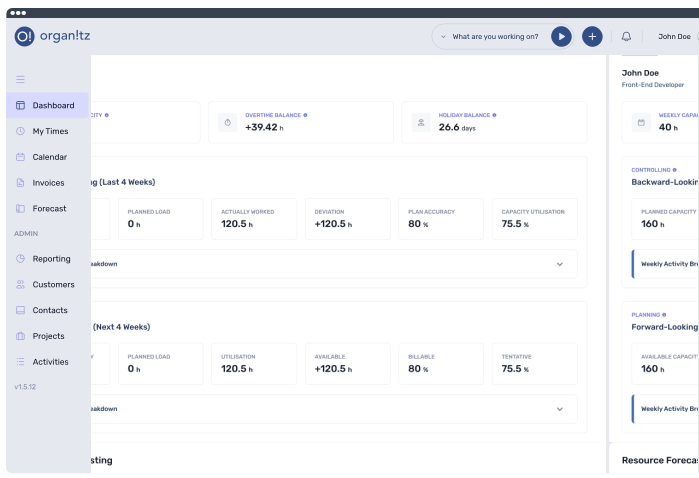
Knowing someone's contracted capacity does not tell you whether they can take on a new engagement next week.
Realistic resource planning combines two perspectives:
contracted capacity · working schedules · calendars · leave
project and engagement assignments · planned work · future utilization
organitz connects the two so you can see how much capacity is actually still available to plan.
The underlying employee and working-time context remains managed in Employee Time Tracking.
When multiple client engagements run in parallel, a list of employees is not enough.
organitz gives you visibility into:


available capacity

planned utilization

project and engagement assignments

remaining capacity

future overload
Managers can act before capacity constraints begin to affect delivery.

Resource planning connects your people with upcoming client work.
Employees can be associated with the relevant projects and engagements in the planning context.
This makes practical questions easier to answer:
The engagement itself remains managed within Client Delivery.
Overbooking is much harder to solve once deadlines are already at risk.
organitz helps make future pressure visible earlier.
Resource planning becomes a forward-looking management tool rather than a response to problems that have already happened.
Where does planned workload exceed available capacity?
Where can additional work still be absorbed?
Where can work be redistributed across the team?

organitz connects today's resource plan with upcoming workload.
Managers can look ahead across future periods and ask:
Forecasting therefore builds on the operational reality already reflected in workforce availability and planned client work.
Professional-services firms constantly need to answer:
Can we actually deliver this work?
organitz brings together:
realistic room for additional work
This helps teams make better-informed decisions before new projects and engagements are added to an already constrained plan.
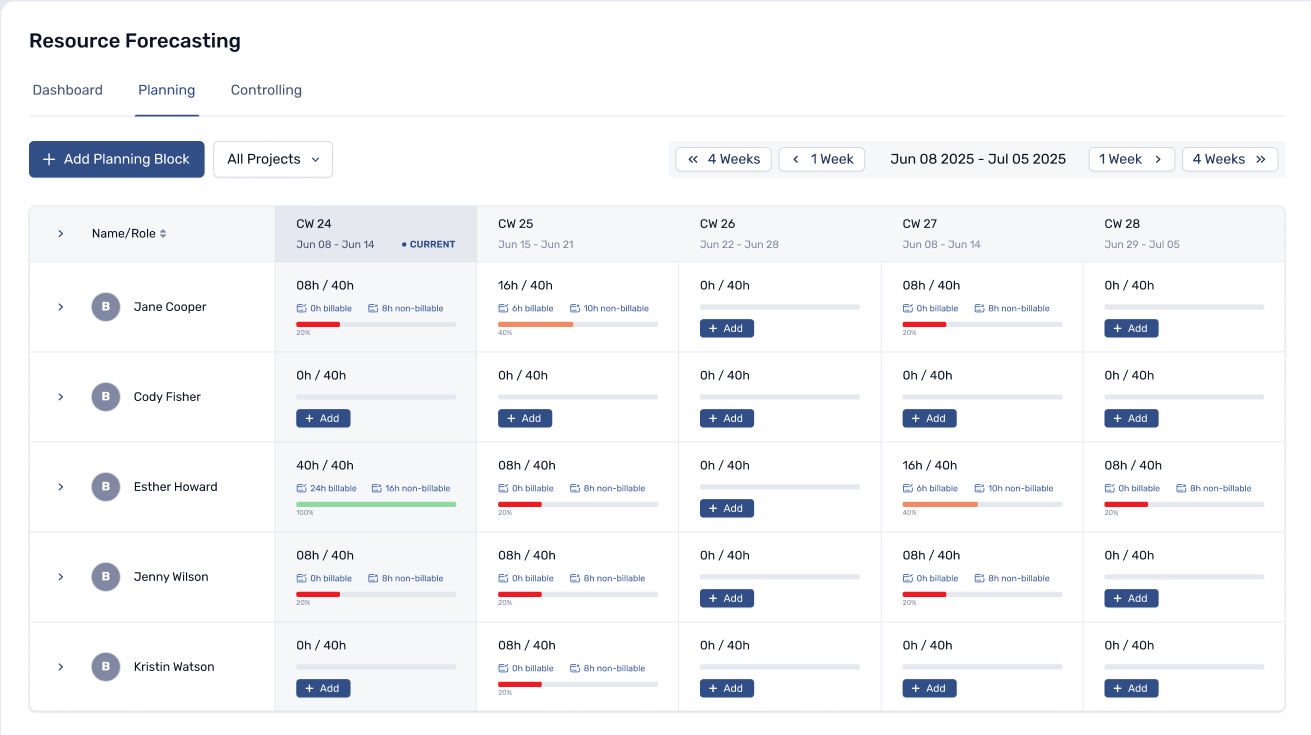
What is likely to happen next?
Who is available? What is already committed? Where will capacity become constrained or open up?
How is the work actually performing economically?
How are actual effort, budgets, billability, and profitability developing?
This keeps forward capacity planning separate from actual financial performance.
Explore Project ProfitabilityAccounting & Advisory · Consulting · IT & Software Services · Agencies · Architecture & Engineering · Professional Services
When people work across several projects and recurring engagements:

Team Capacity


Allocation

Planned Utilization

Future Capacity
needs to stay visible in one connected operating model.
Resource planning compares available team capacity with work that has already been planned so managers can see remaining availability, future workload, and potential capacity constraints.
Resource planning builds on the relevant employee context, such as contracted capacity, schedules, calendars, and leave, and connects it with planned project and engagement assignments.
Yes. Employees can be associated with the relevant projects and engagements within the planning context.
Yes. Connecting available capacity with planned workload makes potential future overload and unused capacity easier to identify.
Yes. Forecasting extends the planning view into future periods to understand how workload and available capacity are likely to develop.
Resource planning is forward-looking and focuses on who can deliver future work. Project profitability analyses the actual economic performance of projects and engagements.
We'll show you organitz around your own teams, engagements, and planning structure.